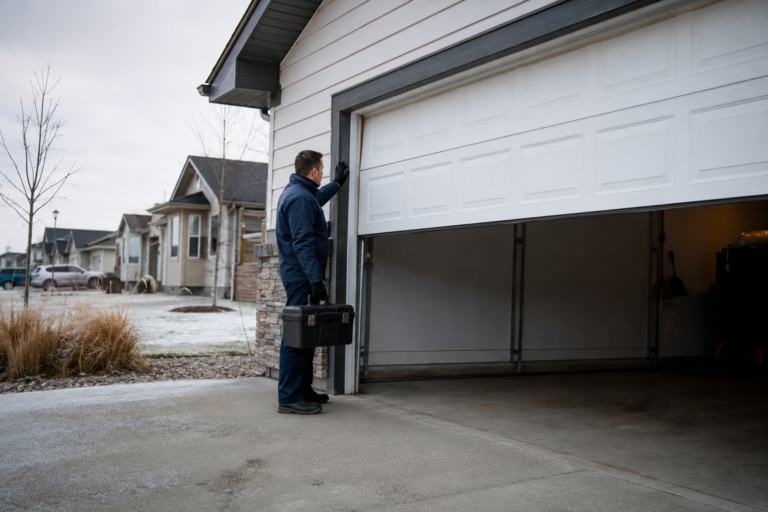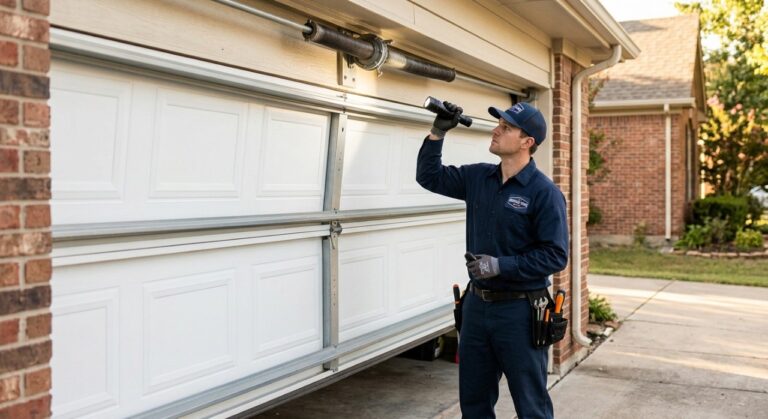


If your garage door suddenly refuses to open, makes a loud bang, or feels impossibly heavy to lift by hand, there’s a good chance the culprit is a broken spring. For homeowners across Regina, this is one of the most common — and most misunderstood — garage door problems. Between our brutal winters and daily freeze-thaw cycles, garage door springs in Saskatchewan take a beating that springs in milder climates never see.
This guide walks you through everything you need to know about garage door spring repair in Regina: how to spot a failing spring, what causes them to break so often here, what repair actually costs, and why this is one home repair you should never try to tackle yourself.
Why Garage Door Springs Fail So Often in Regina
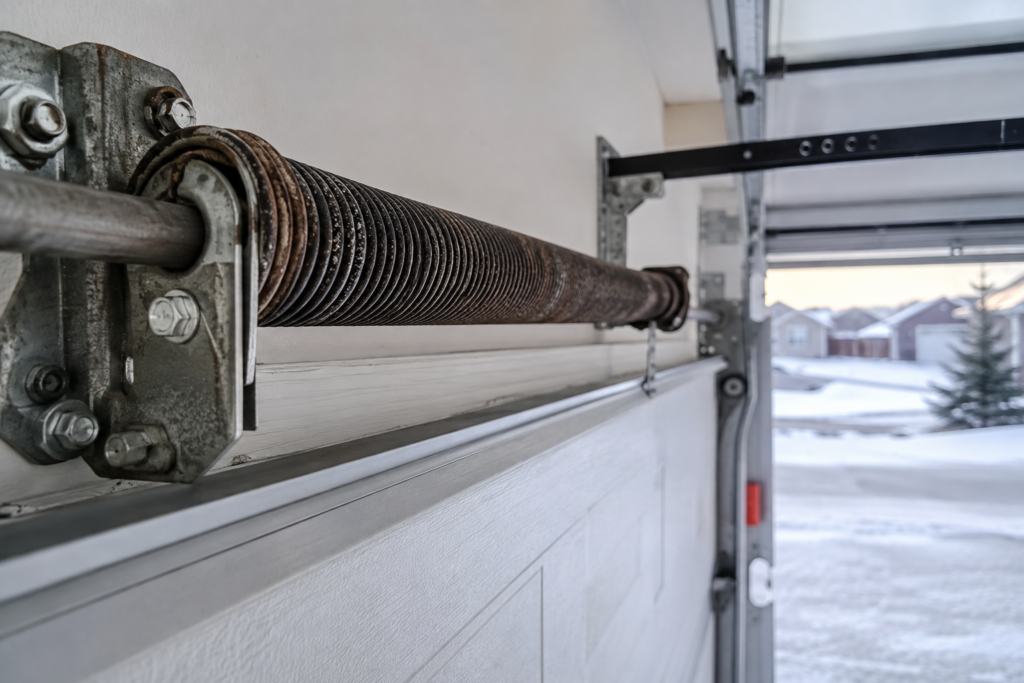
Every garage door relies on either torsion springs (mounted horizontally above the door) or extension springs (running along the upper tracks) to counterbalance the weight of the door. Without that tension, even a lightweight garage door can weigh well over 150 pounds — far too heavy for an opener motor or a person to lift safely on their own.
Regina’s climate is particularly hard on these components. A few local factors accelerate spring wear:
- Extreme temperature swings. Winter lows that dip past -30°C make steel brittle, while summer heat causes expansion. That constant contraction and expansion fatigues the metal faster than in more temperate cities.
- Moisture and rust. Snowmelt, road salt, and humidity trapped in an unheated garage speed up corrosion, which weakens spring coils over time.
- Heavy daily use. Most Regina homes rely on the garage as the main entry point, especially in winter — meaning springs cycle open and closed far more often than in homes with an attached garage used occasionally.
On average, a torsion spring is built to last around 10,000 open-close cycles, roughly 7 to 10 years of typical use. In Regina, harsher conditions often shorten that lifespan.
Signs Your Garage Door Spring Is Failing
Springs rarely fail without warning. Watch for these red flags before a complete break leaves you stranded:
- A loud bang or pop coming from the garage (often the sound of a spring snapping)
- The door feels unusually heavy when lifted manually
- The door opens only a few inches, then stops or reverses
- Visible gaps or separation in the coils of the spring
- The door looks crooked or uneven as it opens
- Your opener motor strains, clicks, or hums without moving the door
If you notice any of these signs, stop using the garage door opener immediately and avoid manually forcing the door open. Continuing to operate a garage door with a failing spring can cause additional damage to the tracks, cables, and opener — and creates a serious safety risk.
Torsion Spring vs. Extension Spring Repair
Most homes in Regina built in the last few decades use torsion springs, mounted on a metal shaft above the door opening. Older homes and some detached garages still use extension springs on either side of the upper tracks.
The repair approach differs slightly between the two:
Torsion spring repair requires winding bars and precise tension calculations based on your door’s weight and height. This is widely considered the most dangerous DIY repair in residential home maintenance, since a spring under full tension can cause severe injury if it slips.
Extension spring repair is somewhat more accessible but still involves high tension and requires safety cables to prevent the spring from becoming a projectile if it fails.
In both cases, springs are almost always replaced in pairs, even if only one has broken. The second spring is under the same stress and cycle count, so it’s usually close behind.
Garage Door Spring Repair Cost in Regina
Pricing varies based on spring type, door size and weight, and whether one or both springs need replacing.
Heavier doors — such as insulated double-car doors common in newer Regina builds — generally cost more to fit with the correct spring size and tension rating.
Why DIY Garage Door Spring Repair Isn’t Worth the Risk
It’s tempting to search for a quick fix, but garage door springs store an enormous amount of mechanical energy. Every year, emergency rooms treat injuries from spring-related accidents, ranging from cuts and bruises to broken bones and worse. Without the right winding bars, tension charts, and safety training, a DIY repair can go wrong in a split second.
A licensed technician will also:
- Correctly measure the spring wire size, coil diameter, and length for your specific door
- Balance the door properly so your opener motor isn’t overworked
- Inspect cables, rollers, and hinges for related wear while they’re already at it
- Test the door’s safety reversal features before leaving
Given the cost of a professional repair versus the risk of a serious injury or a botched installation that damages your door and opener, this is one job best left to trained hands.
Getting Help Fast in Regina
If your garage door spring has broken, the priority is getting a qualified technician out quickly, especially in winter when a garage door stuck open can mean frozen pipes and a wide-open entry point to your home. Look for a local company that offers same-day or emergency response, carries proper insurance, and stocks the spring sizes needed for common Regina home builds.
For reliable, fast garage door spring repair in Regina, you can find trusted local support and service options through DoorXpert’s garage door help page.
Preventing Future Spring Failures
While springs eventually wear out no matter what, a few habits can extend their lifespan:
- Get an annual inspection, ideally before winter, to catch early wear.
- Keep the door balanced — have a technician check tension if the door feels heavier than usual.
- Lubricate moving parts (springs, hinges, rollers) twice a year with a silicone-based lubricant, not grease, which attracts grit in Regina’s dusty summers.
- Avoid slamming the door or using the emergency release repeatedly, which adds unnecessary stress cycles.
- Watch for rust and address it early, since corrosion is one of the biggest spring killers in Saskatchewan’s climate.
Final Thoughts
A broken garage door spring is inconvenient, but it’s also a clear signal that it’s time to call a professional rather than reach for a ladder and a wrench. Between Regina’s extreme winters and heavy daily garage use, springs here work harder than almost anywhere else in the country — so when yours starts showing signs of wear, don’t wait for a complete failure.
If you’re dealing with a broken or failing garage door spring in Regina, get in touch with a trusted local service like DoorXpert to get your door back to safe, smooth operation quickly.

Written by
admin
Part of the DoorXpert team — sharing practical garage door tips, maintenance guides and industry insights for homeowners in Regina, SK.